Gradient is a startup habit tracker app designed to let users track almost anything measurable.
Our process was rapid prototyping in 5 rounds of testing. This approach allowed us to test new features, fix usability issues, and refine the design from lo-fi to hi-fi.
Key design decisions focused on enhancing flexibility, quick progress tracking, data insights, and long-term progress visualization.
Through testing, we also discovered the potential for network effects - allowing users to collaborate and track progress together, even inviting non-users to join.
In the end, we received overwhelmingly positive feedback from test users.
Gradient is a startup habit tracker app designed to be as flexible as your lifestyle. Unlike many habit trackers that focus on specific types of routines, Gradient gives users the freedom to track almost anything that can be measured. Whether it’s steps walked, hours worked, pages read - Gradient adapts to your needs.
Gradient builds a custom schedule for your goals. From there, it provides an intuitive way to track habits, no matter how complex or simple. Whether you're aiming to meditate for 10 minutes daily or run 50 miles in a week, Gradient is designed to keep you on track.
Gradient had a closed beta with about 150 users. We started by diving into the existing user logs, analyzing behaviors, and drawing insights from their interactions with the app.
One of the standout positives was that users loved the app’s flexibility. The ability to track nearly any habit and customize their experience made Gradient appealing right from the start.
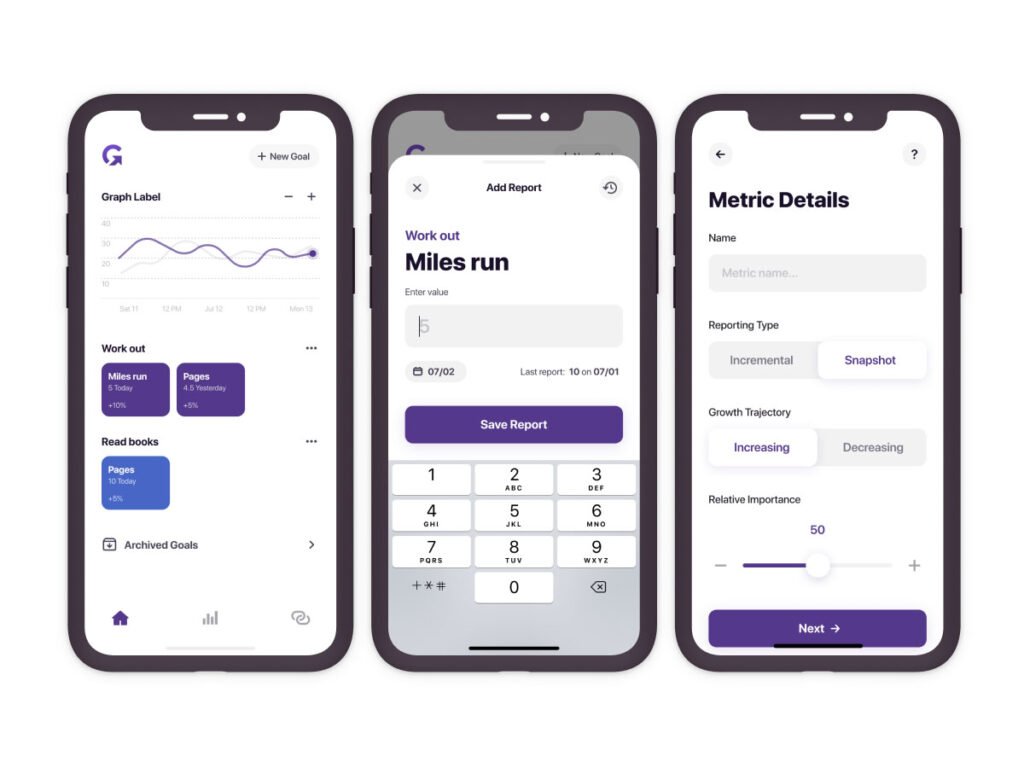
However, the beta revealed some key areas for improvement:
These insights were invaluable and became the foundation for the next phase of improvements to make Gradient even better.
To ensure Gradient met user needs, we embarked on five rounds of testing with a total of 36 users. Our approach? Rapid prototyping combined with user interviews, which gave us the agility to quickly test, iterate, and refine features.
This method allowed us to test new features by rolling them out in their simplest form and gathering immediate feedback, ensuring we stayed aligned with user needs. It also helped us gather deeper insights; by engaging directly with users, we learned more about how they approached habit tracking and uncovered preferences and patterns we hadn’t initially anticipated. Early testing revealed friction points in the app’s design, and iterating in rapid cycles allowed us to address these usability issues before moving on to more polished versions.
We started with low-fidelity prototypes - basic wireframes and sketches that allowed for quick changes. By the end of the process, we had moved to high-fidelity prototypes, bringing the vision of Gradient to life with more detailed design and interactions.
In the finale, we made several important design choices, all centered around enhancing the app’s flexibility and usability.
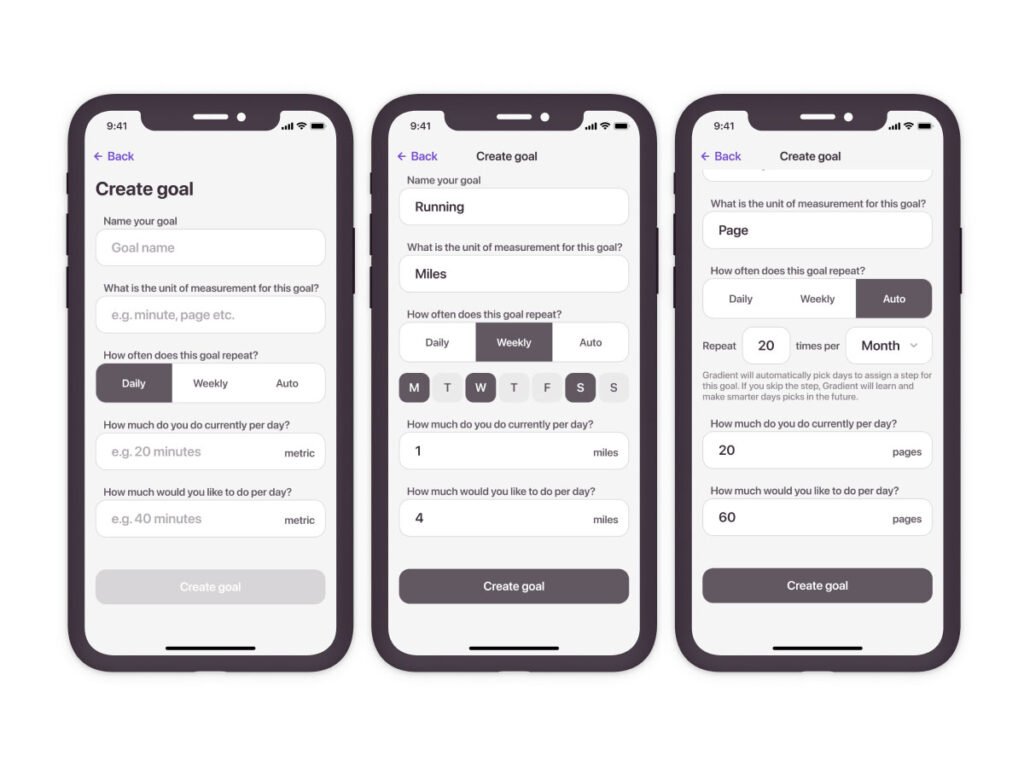
First, we doubled down on flexibility - the core feature users loved in the beta. To accommodate the diverse ways people track habits, we introduced customizable goal measurements. This meant users could set their own units, whether they were tracking miles, minutes, or any other metric.
Additionally, the repeat options were expanded to include specific days of the week, exact or relative monthly dates, and even random occurrences. We also implemented features like skipping and adjusting steps, allowing users to easily modify their progress.
For added convenience, users could manually add steps for any given day, giving them more control over their tracking.
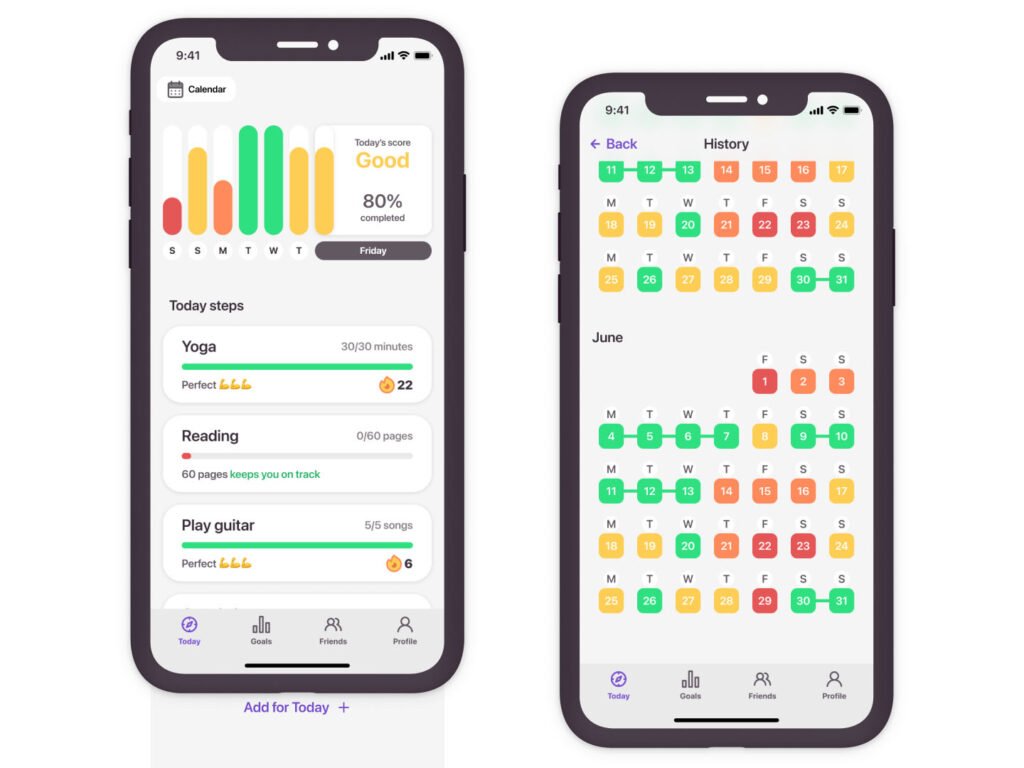
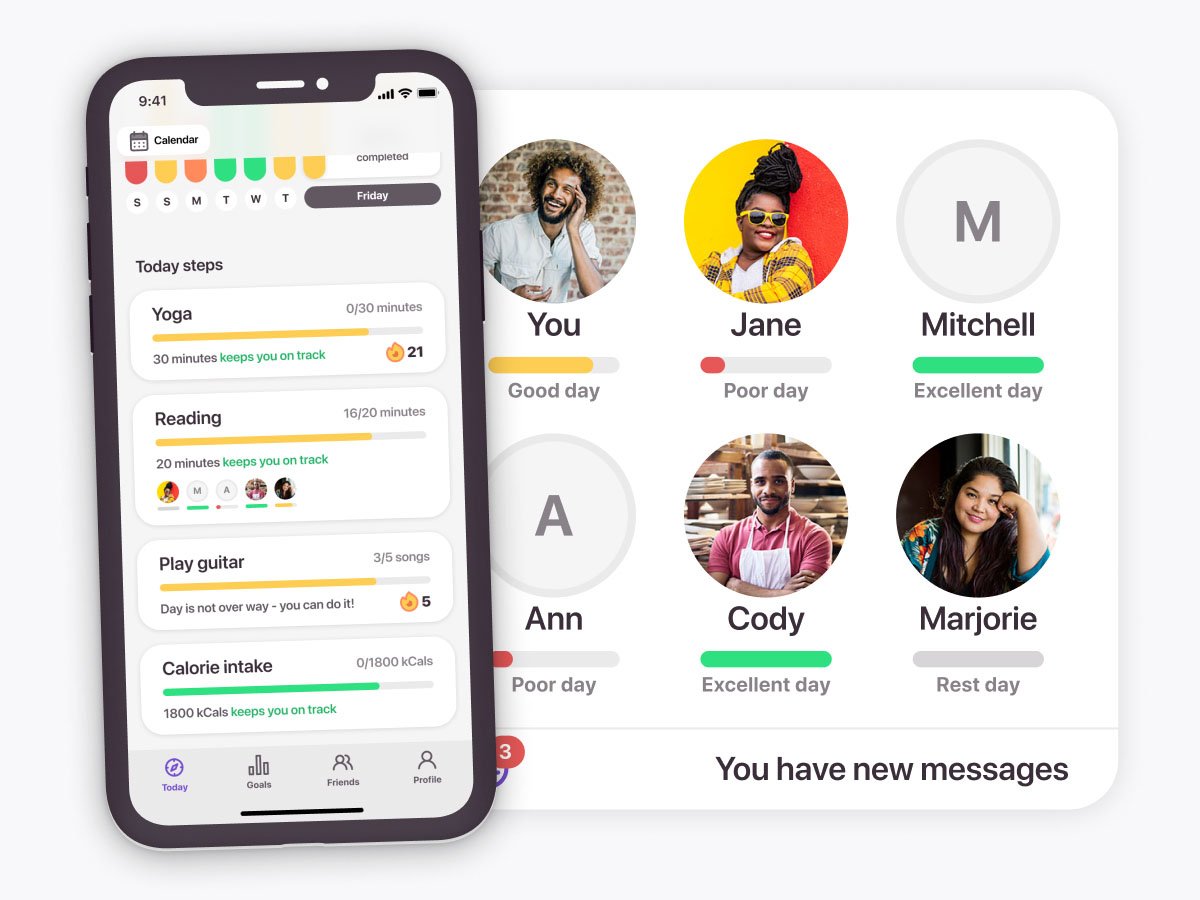
To improve the user experience, we also added a Today screen that consolidates key information. On this screen, users can see their steps for the day along with an overall score, providing a clear snapshot of their progress.
We also expanded the Single Goal screen, introducing a detailed view where users can dive deeper into their habit data. This allowed for more granular insights, helping users stay more connected to their goals.
Lastly, we introduced a Calendar screen and Streaks, giving users a broader perspective on their progress over time. These features allowed users to visually track their performance and maintain momentum by viewing streaks, offering both motivation and accountability.
These decisions aimed to strike a balance between flexibility and simplicity, creating a more intuitive and empowering experience for users.
During our user interviews and testing, we uncovered an interesting insight: many of our users weren’t pursuing their goals alone. A significant number had gym buddies or shared goals with friends or family members. This discovery led us to explore a new feature - Shared Goals - which turned out to be a massive success.
The Shared Goal feature allows users to invite others to work toward a common goal, fostering collaboration and accountability. Each day, Gradient displays the relative progress of all participants, making it easy for users to track not only their own progress but also how their friends are doing.
What made this feature even more powerful was its ability to invite people who weren’t already using Gradient. Users could send invites to anyone, encouraging them to join in and start tracking together. This created a sense of community and brought in the potential for network effects, as Gradient became more valuable the more people used it.
Ultimately, the Shared Goal feature added a new dimension to Gradient, transforming it from a personal habit tracker into a collaborative tool that’s even better when used with others.
By the end of the project, Gradient had evolved into a more intuitive and engaging habit tracker, thanks to the improvements we implemented based on user feedback.
We also saw great success with the introduction of network effects through the Shared Goal feature, as well as the Streaks feature, both of which significantly boosted user engagement.
Overall, the feedback from our test users was overwhelmingly positive. The combination of flexibility, community features, and ease of use turned Gradient into a tool that not only helps users track their habits but also empowers them to stick with their goals in a more social and rewarding way.
Let's meet and discuss it