Concept design of a Smart City platform for a large global brand, aimed at improving urban life in Serbian cities.
The platform integrates various smart services, such as citizen participation, healthcare, and parking, all while leveraging Fiware tools to manage IoT devices and data.
A web dashboard was developed to allow city administrators to monitor, analyze, and manage these systems.
The project was publicly presented in Zlatibor, Serbia, where it received positive feedback, and the client was provided with materials to continue development and promote the platform further.
This project was a concept design developed for a large global company, aimed at transforming urban living through the implementation of a Smart City platform in Serbian cities. The goal of the project was to envision how modern technology could be harnessed to improve daily life for citizens, while also providing city planners and administrators with advanced tools for better governance and planning.
At its core, the platform was designed to offer a range of essential services to citizens, focusing on convenience, efficiency, and accessibility. The design also detailed how these services would function.
From a city planner’s perspective, the platform would generate valuable data points through the integration of smart hardware equipment, such as sensors and IoT (Internet of Things) devices. These data streams would give city administrators a clearer picture of how the city works. The data could also support predictive analytics, helping to identify potential issues before they become critical.
By bringing together these services and data points, the concept design was intended to create a more connected, efficient, and livable urban environment.
To ensure seamless integration with a variety of smart hardware from different manufacturers, the platform was designed to be highly adaptable. The solution needed to connect with numerous IoT devices and sensors, each potentially produced by different vendors. To standardize communication between these disparate devices and create a cohesive ecosystem, we opted for the Fiware set of tools as the foundation of the platform.
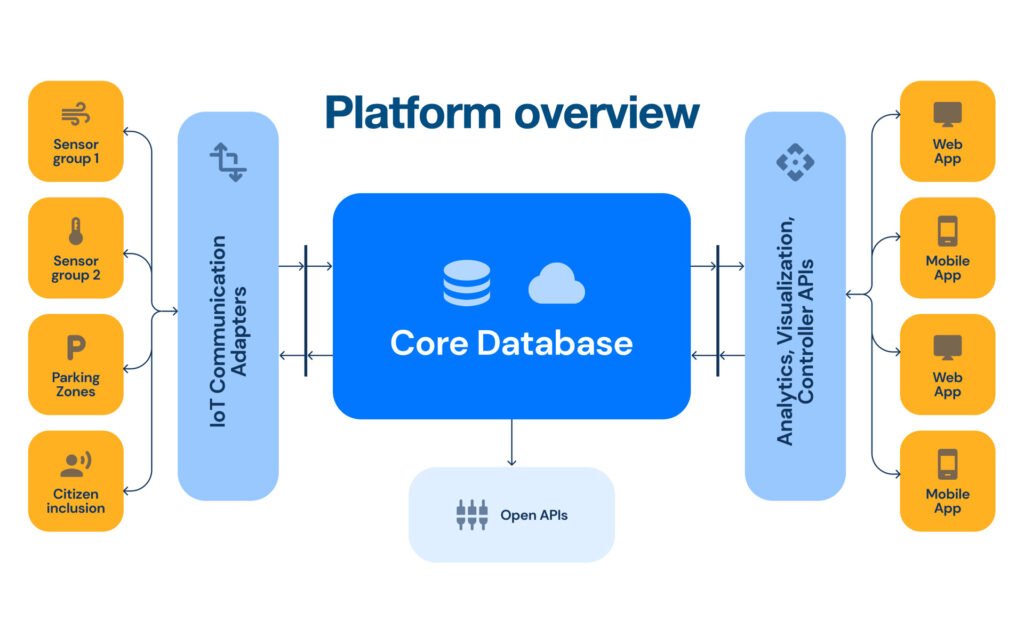
At the core of Fiware’s functionality are two essential components: an interface for IoT communication and context management. The IoT interface was crucial for ensuring that devices, regardless of their origin, could communicate in a standardized way, allowing for smooth data flow between sensors, devices, and the platform. The context management system, on the other hand, handled the collection, storage, and usage of vast data sets. This system enabled the platform to process and make sense of data from a variety of sources, allowing it to generate actionable insights and ensure that city planners and administrators had access to the information they needed.
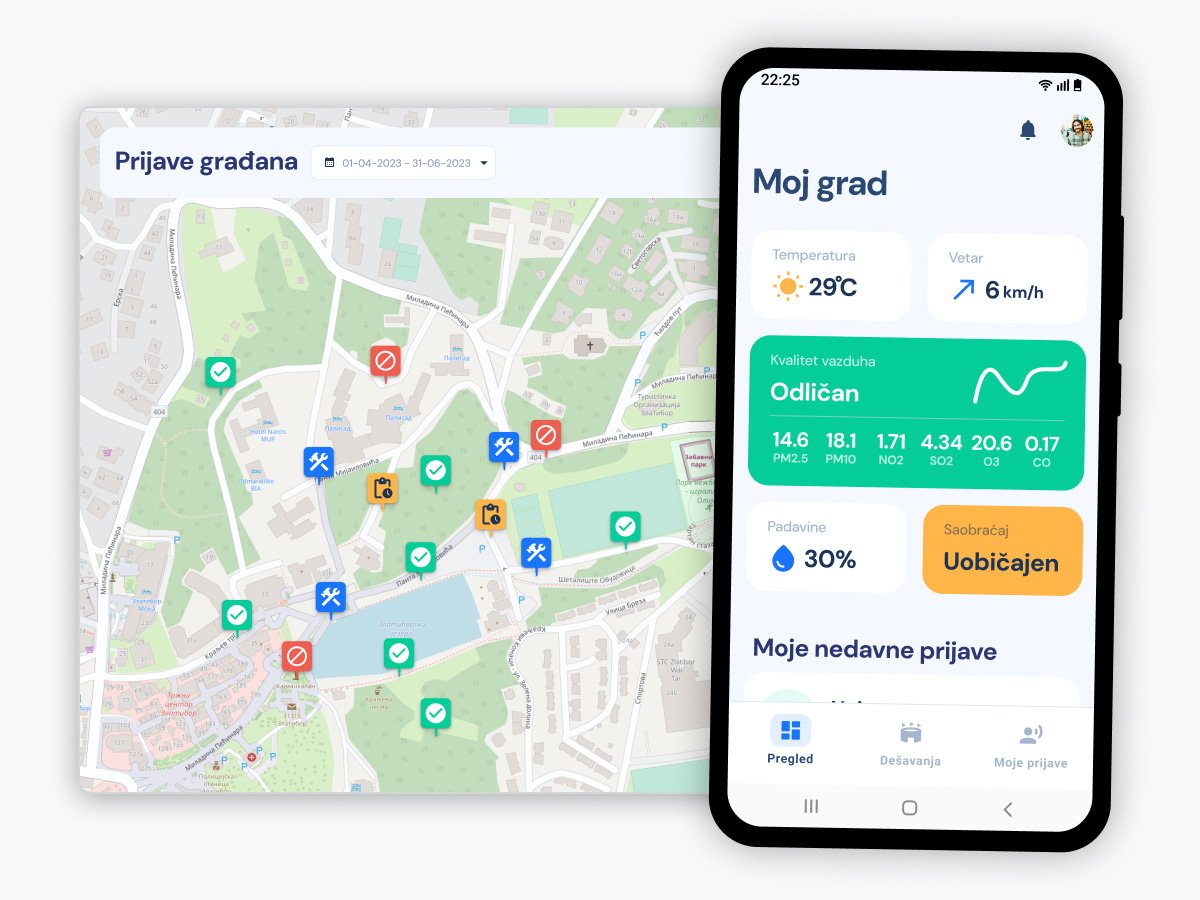
The customer-facing part of the platform - the web dashboard - was a critical piece of the project. This dashboard served as the central system for monitoring, analyzing, and managing the collected data. Designed with user-friendliness in mind, the dashboard allowed administrators to create accounts with different roles, enabling access control and ensuring that sensitive data was only available to authorized personnel.
Within the dashboard, users could analyze data using a variety of tools, such as interactive maps or tabular data views. The platform featured robust filtering capabilities, allowing administrators to sift through data using custom date intervals and focus on the information that mattered most. Additionally, the system allowed for management of the IoT network itself. This meant that IoT configurations could be updated remotely—an administrator could, for instance, change the parking zone associated with a particular sensor or group of sensors, all without needing to be physically present.
By combining these advanced features with Fiware’s open-standard tools, the platform was designed to provide city administrators with a powerful and flexible system for managing a wide array of smart devices and the data they generate.
As the title suggests, citizen services are designed to be publicly accessible and cater directly to the needs of urban residents. Within the Smart City platform, I worked on several key services aimed at improving the daily lives of citizens by offering more convenient, efficient, and transparent solutions.
One of the primary services I contributed to was Citizen Participation, which empowers residents to engage directly with their city’s maintenance and development. Citizens can use the platform to report issues, such as broken streetlights or potholes, and these reports are automatically forwarded to the appropriate city service providers. Each problem is tracked through a ticketing system, ensuring accountability and timely resolutions. Once the issue is resolved, the citizen is notified, creating a clear feedback loop. In addition to handling problems, the platform allows city authorities to communicate important updates or news directly to citizens, ranging from service changes to public health alerts. There is also a space for promoting city projects that citizens can get involved in, fostering a sense of community and shared responsibility for urban improvements.
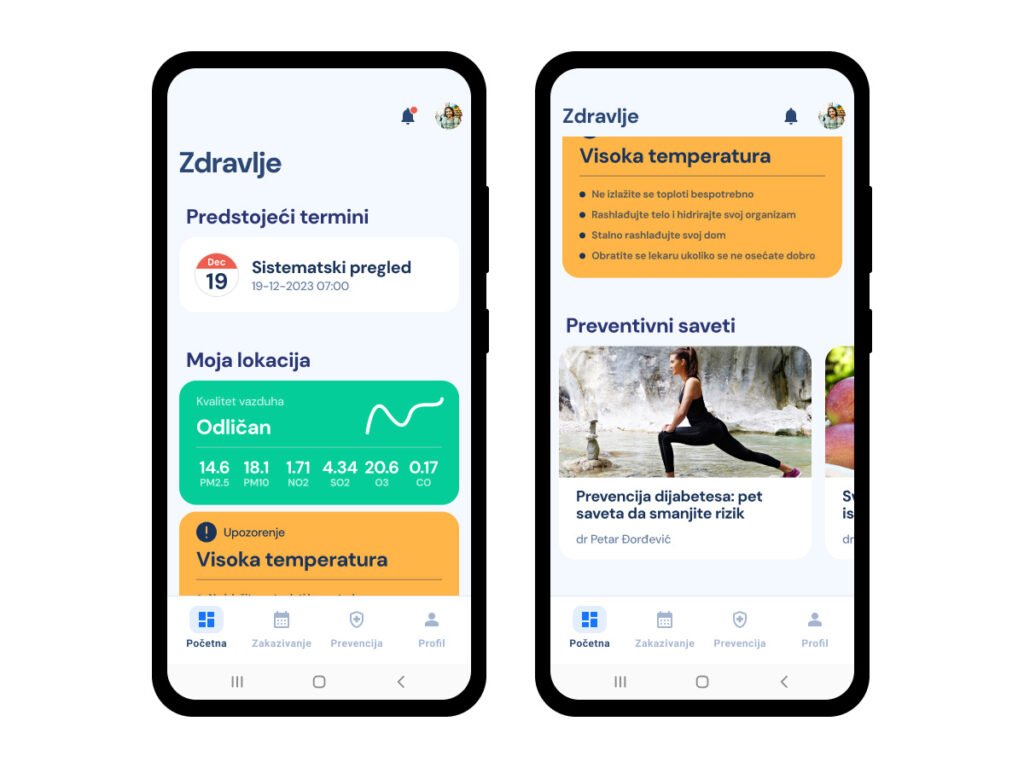
Smart Health Care was another critical service I worked on, designed to simplify the way citizens interact with public healthcare provider. Through the platform, citizens can schedule appointments with their doctors without the hassle of phone calls or visits. The system can also send out health-related alerts, warning citizens of potential health hazards or spreading diseases. A key feature is the focus on preventive care, where citizens can input personal health data to receive tailored insights about their risk for chronic diseases like diabetes or heart disease. Alongside these insights, the platform provides educational resources and preventive tips, encouraging citizens to take a proactive approach to their health.
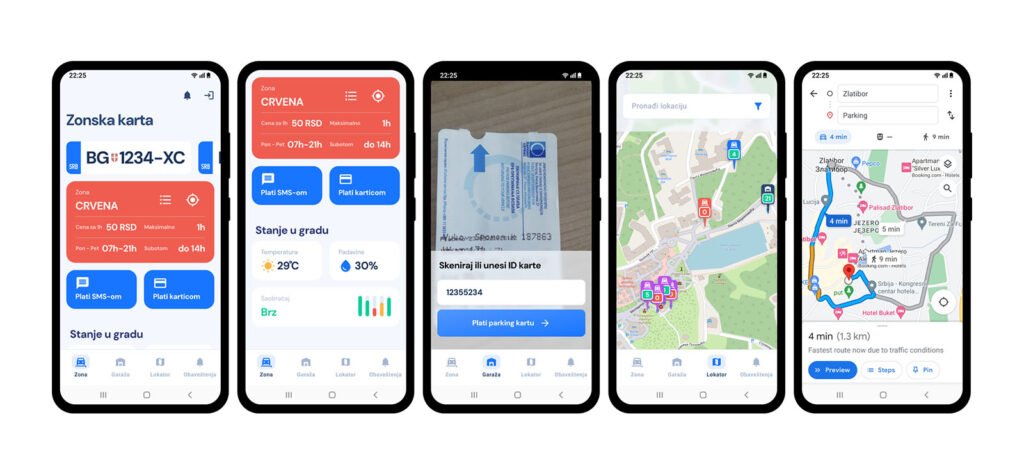
The Smart Parking service aimed to alleviate one of the most common frustrations in urban life—finding and paying for parking. Through the platform’s app, citizens can easily pay for parking via SMS or debit card, making the process seamless and cashless. Moreover, the app provides real-time information about available parking spots, complete with navigation to guide the driver to the location. If a spot becomes unavailable before they arrive, the system will automatically redirect the user to the nearest available spot, reducing stress and saving time.
These services, built into the Smart City platform, not only can improve the day-to-day experiences of citizens but also foster a deeper connection between residents and the city they live in.
The project culminated in a public presentation held in Zlatibor, Central Serbia, where it received an overwhelmingly positive response from the participants. The concept design resonated well with the audience, which included key stakeholders, local officials, and representatives from various sectors.
Following the successful presentation, the client was provided with comprehensive materials that included design documentation, prototypes, and guidelines. These resources were tailored to enable the client to continue developing the platform independently. In addition, the materials served as valuable tools for the client’s promotional and sales efforts, allowing them to showcase the project to other potential cities and partners. This ensured the project could move forward and be scaled across multiple regions.
Let's meet and discuss it