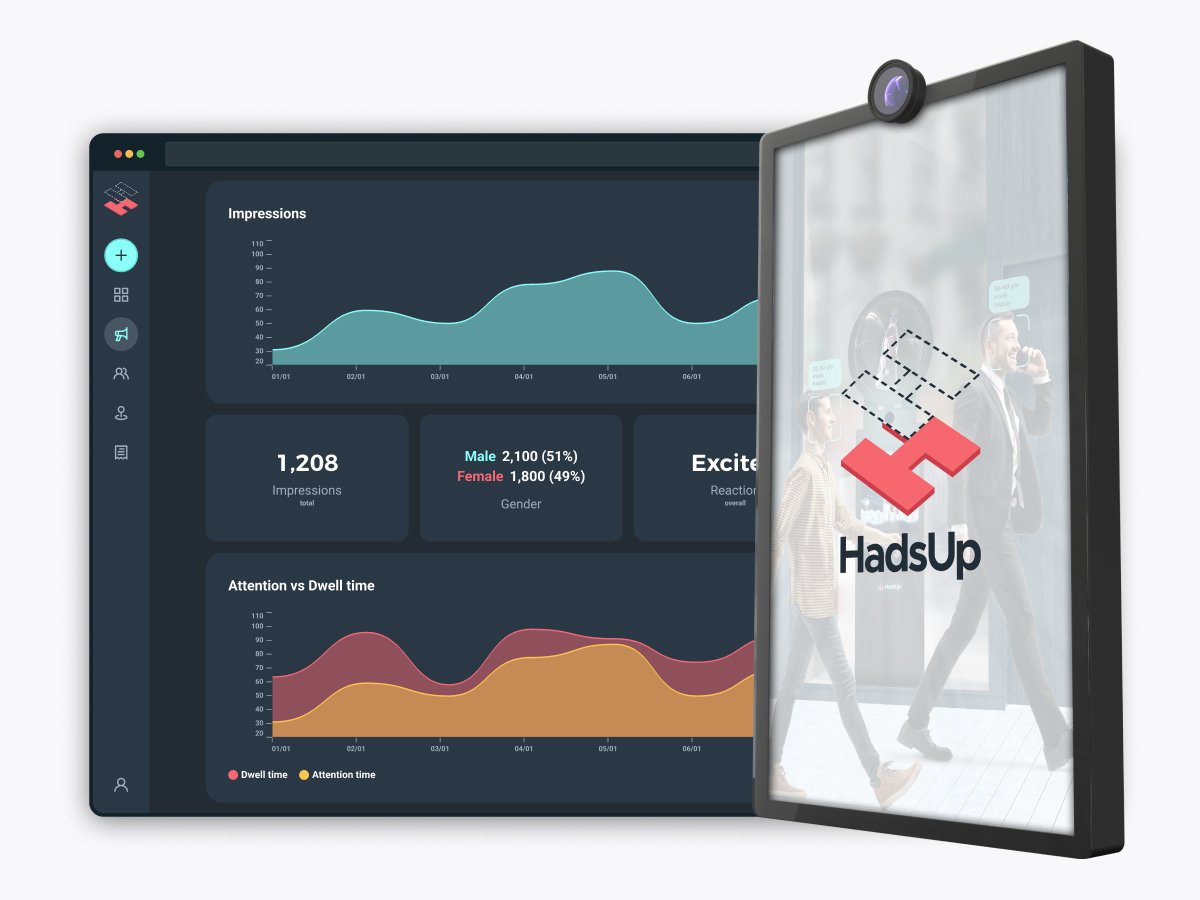
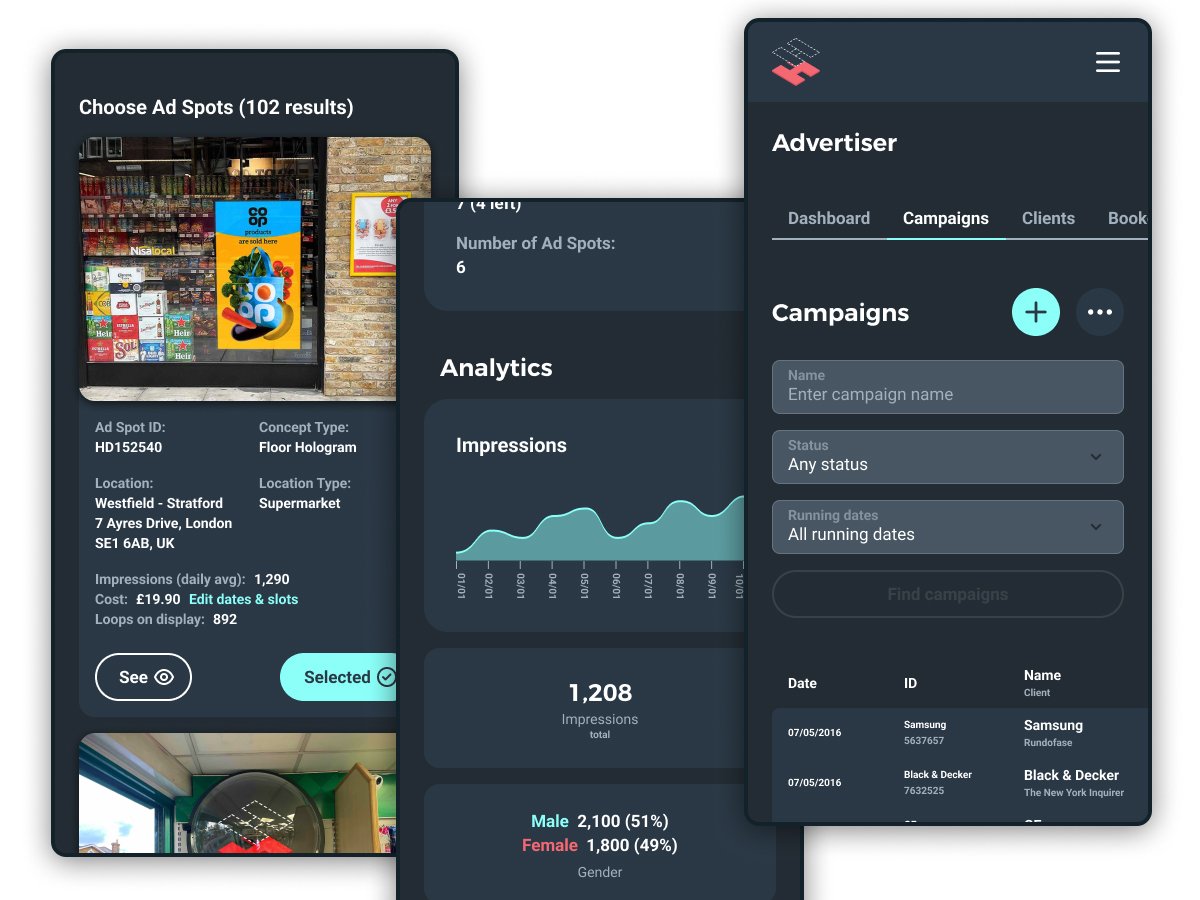
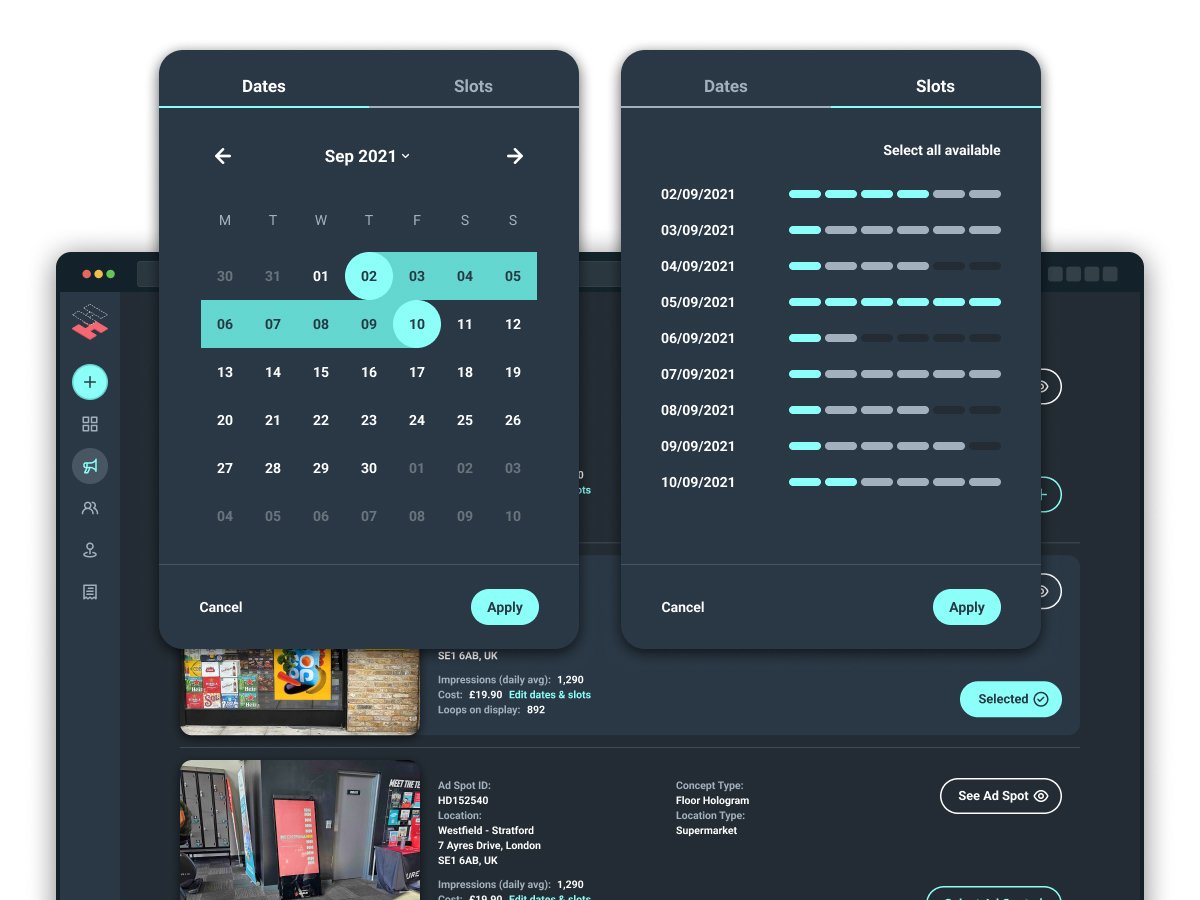
Outdoor advertising has always been a gut-feel medium. You book a billboard, run your ad, and hope for the best. Hadsup had a genuine advantage: digital displays with AI cameras that could measure mood, age, attention, and demographics in real time. As the sole designer in a tightly integrated contract role, I worked directly with the founder to turn that technology into a self-serve web platform.
I ran advertiser research, set a sub-3-minute booking target, delivered the end-to-end design system and prototype, and presented the product in investor pitches.
The platform launched with its first cohort of paying clients and contributed to a $700K seed round.
OOH advertising has never had a real feedback loop. Advertisers spend their budget on outdoor placements and have no reliable way to know who saw their ad, how long they looked, or whether it landed. Hadsup's AI-powered displays changed that. The cameras could analyze attention time, mood, approximate age, and gender in real time. The data existed. The challenge was building a platform that made it actionable and trustworthy enough for advertisers to buy against.
When I came on, Hadsup had the technology and a founder with deep industry knowledge, but no product. There was no way for an advertiser to discover available ad spots, understand the audience data, book a campaign, or measure performance after the fact. My job was to translate the founder's vision into a web platform that covered the full advertiser journey. From first visit through to post-campaign analysis.
The founder had useful prior knowledge from his time in the industry, but I wanted direct signal from the actual users. I ran interviews with advertisers to understand their pain points firsthand, using the founder's insights as a starting framework to pressure-test.
Every advertiser we spoke to had the same frustration: buying OOH space is not self-serve. It involves brokers, phone calls, PDFs, and back-and-forth that adds time and friction to what should be a straightforward transaction. The expectation is that you should be able to browse, target, and book without talking to anyone.
Measuring OOH performance has always been inconsistent. Every media owner uses different metrics, real-time data is rare, and there's no standard way to compare performance across placements. Advertisers weren't skeptical of outdoor advertising as a medium — they were skeptical of it as a data environment. Giving them a single, standardized view of campaign performance was as important as the booking experience itself.
The first design decision I made was to remove the sign-up gate from the exploration phase. My thinking was straightforward: advertisers should be able to browse available ad spots, filter by audience demographics, and preview location analytics before being asked to register. Showing value first would drive better-quality sign-ups than hitting people with a form on arrival. Once they'd found spots they wanted to book, that's when we asked them to commit. This was a deliberate funnel decision, not a default.
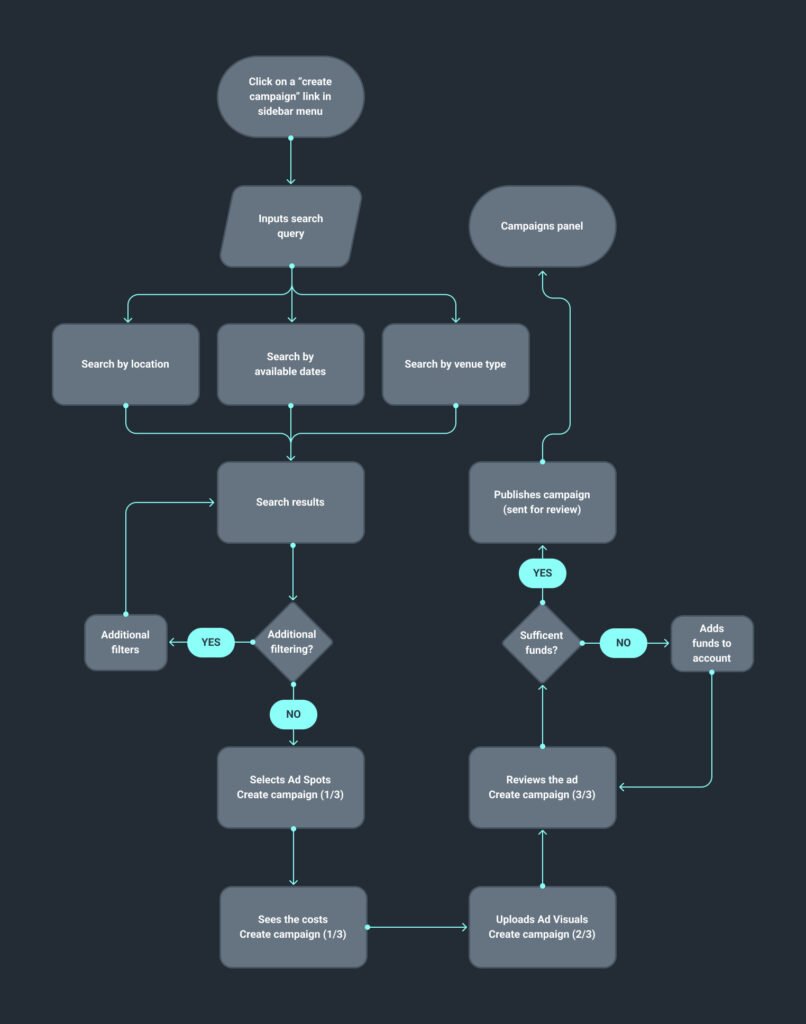
I set a goal early: an advertiser should be able to go from exploring ad spots to a confirmed campaign in under 3 minutes. That kind of target forces prioritization — anything that doesn't earn its place in the flow becomes a problem to solve. I simplified campaign creation into 3 steps, making it easy to select spots, upload assets with live device previews, and confirm. User testing validated the result: 3 to 5 minutes end-to-end.
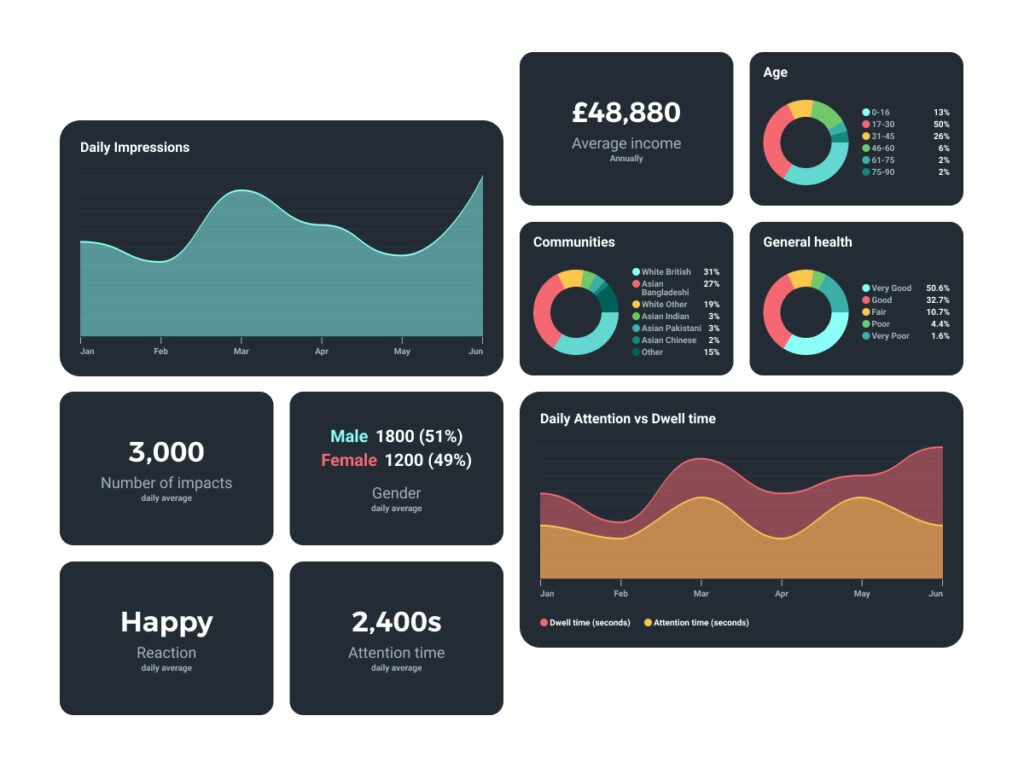
The AI camera data was the platform's core differentiator but also its biggest communication challenge. Attention time, mood reactions, and real-time demographic breakdowns were metrics advertisers had never encountered in an OOH context. I designed the analytics dashboard around the decisions they'd actually need to make — which spots performed, how to compare placements, and what to adjust next time — rather than surfacing raw data and leaving them to interpret it. The goal was to make the AI data feel like a natural extension of how they already thought about campaign performance.
I delivered an atomic design system in Figma alongside a fully clickable prototype covering all flows. The prototype served dual purpose: it gave the development team a clear, self-contained handoff reference, and it gave the founder something tangible to show in investor meetings. I presented the product directly in investor pitches — having a polished, interactive prototype in the room made the platform real at a stage when the live build was still in progress.
User testing confirmed a sub-3-minute end-to-end booking flow. Advertisers reported improved post-campaign decision-making as a direct result of the analytics. The MVP successfully onboarded the first cohort of paying clients, and the product, both web and native app, secured a $700K seed round.
Let's meet and discuss it